
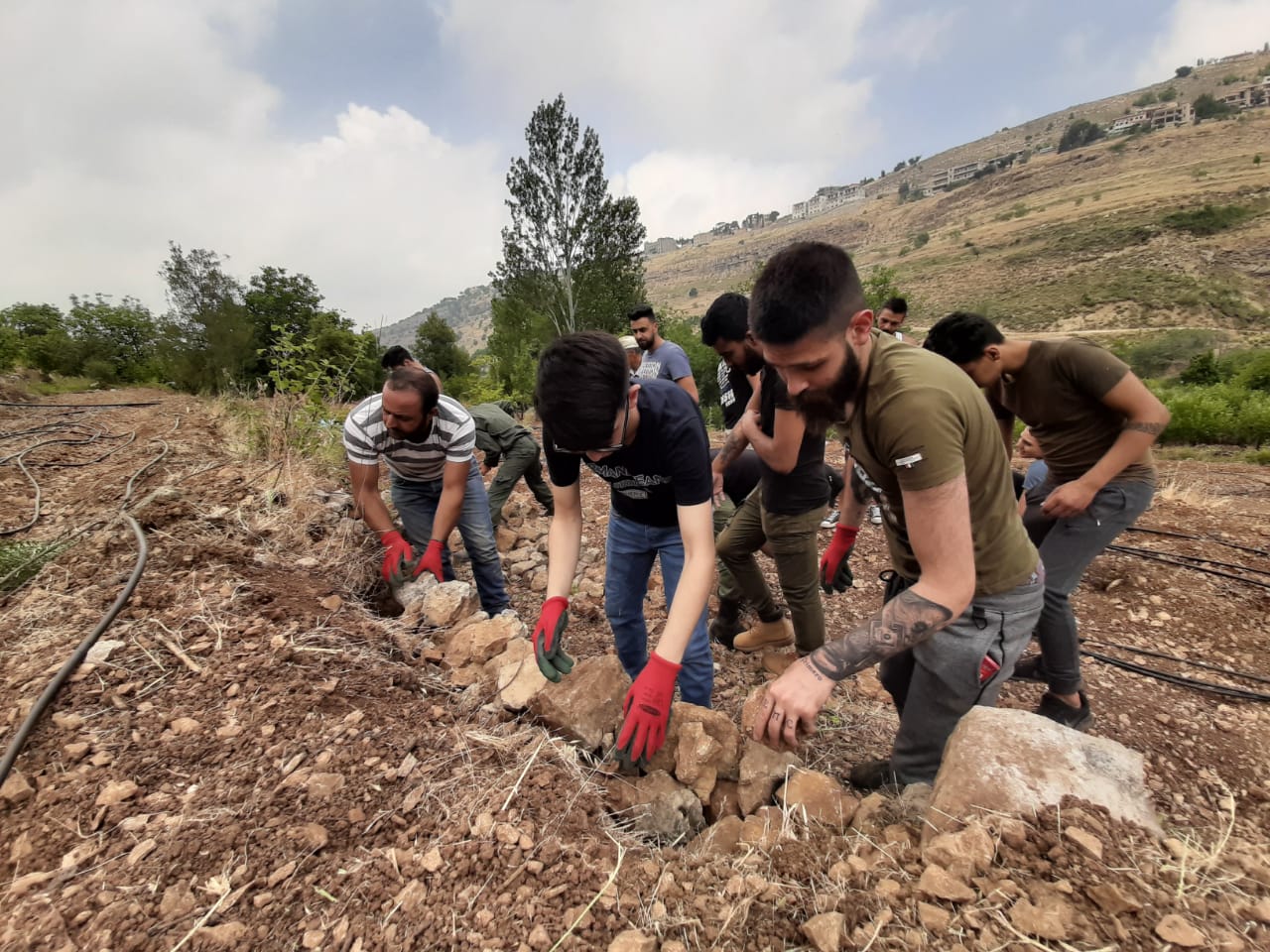
The Italian Agency for Development Cooperation (AICS) in Lebanon promotes the involvement of public institutions operating in the territory as active participants in a process aimed at sustainable and inclusive territorial development. This process focuses on governance, innovative partnerships between the public and private sectors, the growth of human capital, and the exchange of best practices between Italian and Lebanese entities.
Within this framework, a local planning exercise was carried out in ten Unions of Municipalities by UN-Habitat, resulting in the development of Roadmaps designed to guide interventions in key areas of local development.
Based on the outcomes of the consultative process that led to the creation of these Roadmaps, the initiative titled “Promotion of Sustainable Local Development and Job Creation in Lebanon” was launched.
The intervention, assigned to four Italian Civil Society Organizations (CSOs), is structured around two complementary and synergistic components. On one hand, it aims to stimulate the local economy by supporting micro, small, and medium-sized enterprises (MSMEs) and cooperatives, facilitating their expansion into markets. On the other hand, it seeks to strengthen local pathways for employment integration. In this process, Lebanese public institutions play a central role in local governance, while Italian partners contribute through the exchange of innovative know-how.
In parallel, the conservative rehabilitation of the Mar Mikhael railway station in Beirut aims to transform a 10,000 m² area into a multifunctional public space, while preserving its original function as a hub of the Lebanese railway network. This initiative, implemented by UN-Habitat and UNESCO under the coordination and supervision of AICS, combines the preservation of industrial architecture and the cultural and historical heritage of 20th-century transportation with an innovative model of sustainable development focused on the multifunctionality and flexibility of space usage.