
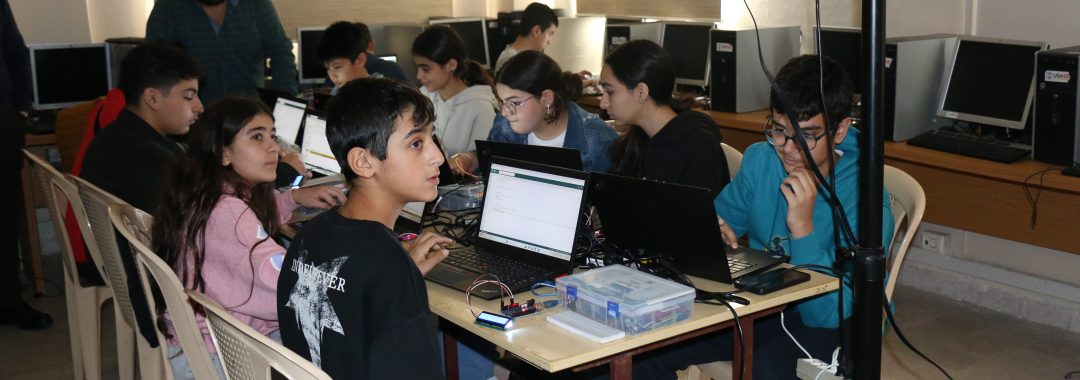
In a country affected by prolonged crises, Italy continues to invest in education as a vital public component. Through AICS Beirut, this commitment is reflected in both local and international partnerships that position education as an instrument of resilience and development.
The intervention strategy focuses on four priorities, aligned with national strategies: The rehabilitation of schools and the creation of safe and appropriate learning environments; Inclusive access to education and the protection of the most vulnerable students (including Syrian and Palestinian refugees, children with disabilities, and Lebanese children from low-income families); The strengthening of technical and vocational education and training (TVET); Support for school nutrition as a means of promoting equity and well-being.
Since 2017, with a total investment of approximately 60 million euros, tangible results have been achieved: 107 schools rehabilitated, 4,900 teachers trained, 287,000 students provided with educational materials, learning activities, and support services, and over 176,000 meals distributed.
These achievements have been made possible through a multi-level collaboration network that enhances the relevance and effectiveness of interventions. In emergency education programs, AICS Beirut works alongside the Lebanese Directorate General of Education, in synergy with Italian and Lebanese civil society organizations and United Nations agencies. These partners contribute to the design, implementation, and monitoring of initiatives, bringing specialized expertise, territorial networks, and operational capacity. TVET initiatives are developed in collaboration with the Directorate General for Technical and Vocational Training, involving labour market participants, youth associations, training centres, and enterprises. This ensures that educational pathways are relevant and aligned with the effective needs of the field.
This collaborative framework among diverse actors like national institutions, civil society, international organizations, and local communities is what makes the Italian contribution to the education sector more robust, inclusive, and sustainable over time.